
When you keep arguing about the same thing and neither of you can find the way out.
You love each other, and yet sharing a life has become exhausting. I’m not here to give you advice or decide who’s right: I’m here to help you break the pattern that keeps you stuck.
Your first 15-minute conversation is free. Sessions in English or Spanish. All couples are welcome, and this is a 100% safe space for LGBTQ+ people.
These patterns harden over time and tend to resist traditional approaches. Integrative Behavioural Couple Therapy (IBCT) was designed for exactly that.

Unhappiness rarely arrives all at once: it creeps in little by little. If you recognise three or more of these signs, you’re not just going through a rough patch. You’re caught in a pattern.
The psychologist John Gottman spent decades watching couples argue and described four ways of talking that, once they become a habit, slowly wear a relationship down. He called them the Four Horsemen: criticism, contempt, defensiveness and stonewalling. Each one has an antidote. Read each line, decide which horseman is showing up, and the card will flip to show how it could be said instead.
Each horseman turns into its antidote once you uncover one of its cards.
0 of 8 cards uncovered
Everyone lets one of these horsemen in now and then; what wears a relationship down is when they become the usual way of talking. One practical tip: notice your own first. They’re the only ones you can change tonight.
Therapy isn’t about learning textbook phrases: we work out what lies beneath each horseman for the two of you, and rehearse another way of saying it in the session until it comes naturally.
Talk it through on a free callA note on reading this: the Four Horsemen come from observational research with couples, mostly married couples in the US. Here we use them as a map of communication to recognise patterns, not to label anyone or predict what will happen to you. If your arguments involve fear, threats or control, that isn’t a communication problem: please read “Is this a good time for couples therapy?” further down.
Sources: Gottman & Silver (1999), The seven principles for making marriage work (horsemen, antidotes and physiological self-soothing); Gottman (1994), What predicts divorce?
One of you moves towards the problem; the other moves away from the heat. Each move is a reasonable response to the other’s, which is exactly why it never gets resolved: what calms one of you is what alarms the other.
Neither role is the bad guy, and arguing over who’s right gets you nowhere. In therapy we make the loop visible as it happens, in the session, and build a different way out. It’s a skill you can practise, not a personality change.
Move either slider and try to make just one person move. You won’t manage it: the more one pushes, the further the other pulls away, and the further one pulls away, the harder the other pushes. This is the loop you’ve just read about, seen from the inside.
Educational activity · not a testOne of you raises something that matters to you. You’re still close.
The problem is the dance, not the couple.
The pursuer isn’t “needy” and the withdrawer isn’t “cold”: each is responding to what the other does. The roles can swap depending on the topic, and they have nothing to do with gender. That’s why, when a single step changes, the whole dance changes.
In Integrative Behavioural Couple Therapy (IBCT) this is called unified detachment: together we describe the sequence step by step, as if you were watching it on video, without looking for someone to blame. Many couples end up giving it their own name (“here we go, the hallway again”), and naming it already slows it down.
This is empathic joining: behind the pushing there’s often a fear of not mattering; behind the withdrawing, a fear of things getting worse or of letting the other down. Once that’s said out loud, the other person stops experiencing it as an attack.
With that groundwork, change follows: asking without blaming, and taking a break while saying when you’ll be back. We rehearse it in session, with your real issues, until it stops feeling hard.
A simplified scene for educational purposes: in a real relationship many more things are at play. If your arguments involve fear, threats or control, it isn’t a dance between equals; please see “Is this a good time for couples therapy?” further down.
John Gottman’s team calls them bids: tiny gestures that ask for the other person’s attention, like a comment, a complaint or a sigh. You can respond to each one by turning towards your partner, turning away or turning against. Each scene shows a bid and a response: decide which way it turns. Nobody is being scored here; it’s about training your eye.
Educational activity · not a testScene 1 of 6
What matters isn’t getting these right, but noticing bids at home. A few ideas from the research by Gottman and his team:
An experiment for this week: notice the bids you make and the ones you receive. Not to keep score on your partner, just to see them.
In an observational study of 49 newlywed couples, Driver and Gottman (2004) filmed a ten-minute dinner and a fifteen-minute conflict discussion: the way couples connected in those everyday moments was associated with more humour and affection during the conflict. It’s correlational: it shows an association, not cause and effect. Read the paper.
Developed in the US by Neil Jacobson and Andrew Christensen, IBCT combines change strategies (for what can be changed) with acceptance tools (for what can’t). It is an evidence-based model that has been shown to work even with long-standing problems that haven’t shifted with other help.
In Integrative Behavioural Couple Therapy (IBCT), the map I share with you in the fourth session has four pieces that spell DEEP: Differences, Emotional sensitivities, External stress and Patterns of communication. Sketch a first draft here, alone or with your partner, and skip anything you’re unsure about: with each step, the two threads weave together.
Educational activity · not a testIf there is fear, threats or violence in your relationship, it isn’t a communication problem. In an emergency, call 999. National Domestic Abuse Helpline: 0808 2000 247 (free, 24/7). If you’re thinking of harming yourself: Samaritans 116 123.
Couples therapy helps in many situations, but not all of them. Tick the statements that describe where you are right now and the traffic light will give you some guidance: green, amber or red, with what is usually recommended in each case. There’s no score, and nothing you tick is saved or sent anywhere.
Educational guidance · not a testIf you’re afraid of your partner or in danger: National Domestic Abuse Helpline 0808 2000 247 (free, 24/7) · 999 in an emergency · Men’s Advice Line 0808 8010 327. If you’re thinking of harming yourself: Samaritans 116 123 (free, 24/7). In Spain: 016 / 112.
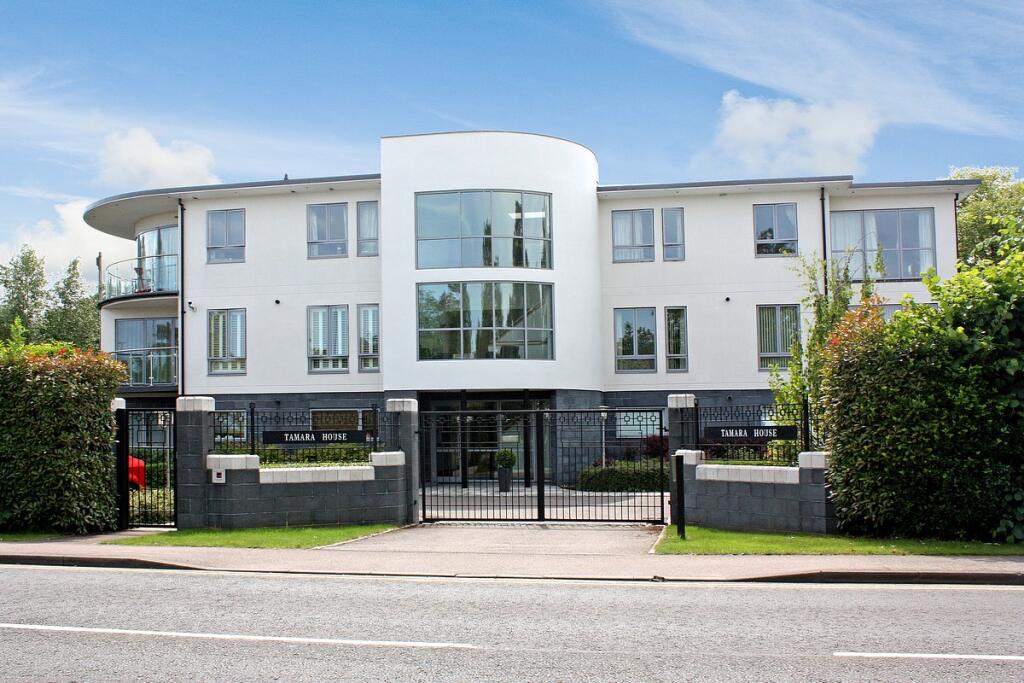
A quiet, private room on a leafy road in south Cambridge. Under a mile from Addenbrooke’s and the Biomedical Campus, about two miles from the city centre. Online sessions are available too.
In Cambridge, private couples therapy typically costs between £90 and £200 a session. These are my fees, published in full with no small print, so that money isn’t the reason you don’t get started.
I am based in Cambridge, UK. My central practice is located within walking distance from Addenbrooke’s hospital. I currently offer mostly in in-person and online sessions.
For clients in other locations (including Europe or USA) sessions are 100% online, with the same quality and confidentiality as in‑person therapy. Wherever you are, you can count on professional and close support.
Interactive map with 1 marker. Use Tab to focus the map. Arrow keys can pan once focused.
To the joint sessions, yes: that’s what lets us work on the conflict from the inside. The process also includes individual sessions with each of you. And if one of you can’t or won’t come, therapy isn’t ruled out: we work with whoever comes.
It’s one of the most common situations, and it isn’t a dead end. We work with whoever comes: what isn’t working in your communication, what fears are holding your partner back, and how to stop responding out of frustration. One person taking the step already changes the dynamic.
Joint sessions last 90 minutes and cost £120 in person in Cambridge or £100 online. Individual sessions within the process last 60 minutes and cost £90 in person or £80 online. The first 15-minute call is free. You’ll find the details under fees.
Yes. Where there is physical violence, serious coercive control or an ongoing affair that isn’t being addressed, joint therapy can be counterproductive or even unsafe. In those cases individual therapy is the right route and, if there is violence or abuse, legal and protective support too. Tell me and I’ll point you in the right direction.
Yes, and with two diaries to juggle it’s often the most realistic option. You can join together from home or each from wherever you are. If you live in or near Cambridge, you can also mix online sessions with occasional in-person ones. Sessions can be in English or Spanish.
No. My job isn’t to hand out blame or give advice, but to understand how you work when you’re in conflict and break that pattern. All kinds of couples are welcome, and sessions are a safe space for LGBTQ+ people.
Fifteen minutes by phone or video, free and with no obligation. Tell me roughly what’s going on and I’ll tell you honestly whether I can help.
Book your free callOr email me at jose.gonzalez.m@cop.es or message me on WhatsApp at +44 7490 975208. I reply within 24 working hours.
We use cookies to improve your experience. By clicking "Accept", you agree to the use of cookies as described in our Privacy Policy. Cookie policy / Política de cookies